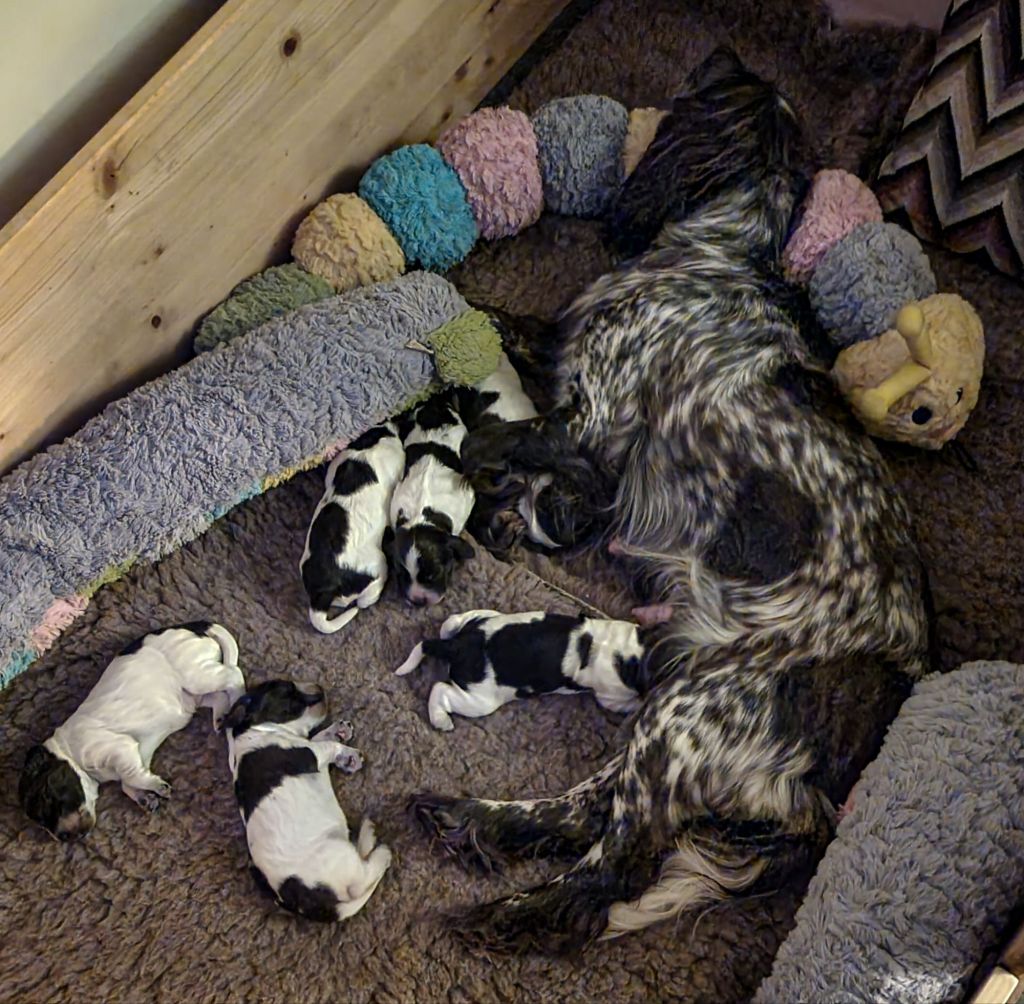
Last year, I raised my first litter of Polish Hunting Spaniel puppies – an intensive yet inspiring project drawing on my background as a psychologist. I had immersed myself in the science of canine wellbeing for two years, so my goal as a breeder was to optimise the puppies’ mental wellbeing by using scientifically backed techniques and environmental enrichment protocols. In this post, I want to share my experiences.
The experiences in the first 12 weeks of a dog’s life have a disproportionately large impact on them than any experiences in the rest of their lives, so I believe that it is my responsibility as a breeder to do my best that the dogs I have chosen to bring into this world leave my care well-equipped to thrive in a human-centric world.

It’s well documented in humans that stress experienced over a lifetime can be very harmful both psychologically and physically – for example, it can significantly increase the risk of illness. For dogs, living in the human world is often full of stress which also impacts the humans they share their lives with.
For dogs, the solution to minimising stress is resilience, and the key to building it lies in early experiences. Early life experiences are also crucial in giving dogs better problem-solving abilities as well as boosting confidence and performance during both basic activities of daily life as well as complex functional tasks.
The responsibility of nurturing resilience
Building resilience through positive early experiences is an ethical responsibility for breeders – we can build the foundations for lifelong mental and physical health that buffer the harmful effects of stress. Building true resilience relies on a flexible, adaptable brain and coping behaviours, fostered through early positive experiences that provide safety, stimulation, and care.
Without these, stress damages developing brains by altering wiring and structures critical for learning and memory. Resilience also impacts an individual’s physical health because stress affects all systems of the body, including the musculoskeletal, respiratory, cardiovascular, endocrine, gastrointestinal, nervous, and reproductive systems.
Research also shows that both enriching and adverse experiences cause epigenetic modifications to stress reactivity and learning capacity over generations. While supportive early care benefits individuals directly, it may also aid descendants by reducing susceptibility to stress.
Bringing together insights from different fields is key to raising resilient, healthy dogs – behavioural genetics, nutrition science, and developmental neuroscience each provide part of the puzzle. By pulling from diverse areas of research, we can design comprehensive programs to set them up for success – although it isn’t easy, the rewards of raising adaptable, resilient puppies make the effort more than worthwhile.
Tailoring enrichment to critical developmental windows
Most people’s experience of puppies starts from the moment one moves into their house, rarely considering what happened before then – yet much of a dog’s life is profoundly shaped by events preceding their time together.
These early weeks also represent a critical period for puppy brain development: Early Neurological Stimulation techniques (ENS, also sometimes called bio-sensor), such as those developed by the U.S. Military can powerfully leverage neuroplasticity during this time. Controlled exposure to mild stressors from novel textures to movement exercises helps wire puppy brains for future resilience. These simple daily exercises in the first two weeks aim to stimulate low-intensity stress responses that build coping skills, optimizing nervous system regulation and establishing crucial neural pathways.
The neonatal period is also a time for Early Scent Introduction (ESI), a puppy training program designed to enhance odor identification and reaction abilities which involves controlled exposure to strong scents in brief daily intervals and recording puppies’ responses. Early scent introduction leverages neuroplasticity to boost scent detection and identification skills and may accelerate proficiency in scent-based sports like tracking and nose work. By stimulating olfactory development during critical windows, it equips puppies for success in odour-centric activities and tasks.
Enrichment protocols support holistic development
After the first two weeks, it’s time to implement a structured socialization and enrichment program. Enrichment programs refer to protocols designed to provide physical and mental stimulation through novelty, tasks, and multisensory experiences.
These types of protocols are commonly used when raising assistance or service dogs as well as other kinds of working dogs. For example, sound desensitization during the optimal developmental window habituates puppies to noises like fireworks, reducing future stressors. This is also crucial for the well-being of dogs that live in urban environments.
Puppies should also be introduced to a wide range of novel experiences at critical developmental stages to reduce future stress.
Breeders can make the most of this learning window of heightened neuroplasticity by continuously introducing novel items like toys, scents, varied surfaces, and textures into the whelping box for the puppies to encourage exploration.
Setting up small barriers encourages the development of independent problem-solving abilities and develops the puppies’ proprioception and sense of space from a very early age.
In essence, by supporting the whole puppy – mentally, physically, and emotionally – we’re not just enhancing the lives of individual dogs. We’re contributing to a future where human-dog relationships are stronger and more harmonious. This holistic approach to puppy rearing, therefore, isn’t just a responsibility; it’s an opportunity to shape a more positive and connected society where both humans and dogs thrive together.
Managing the environment to allow safe yet enriching exploration encourages puppies to approach new things with curiosity instead of fear – a foundational ability for thriving in modern human environments with minimal stress. For example, we took puppies to venues like street markets, beaches, and airports, observing how exposure to realistic environments during their sensitivity windows allowed them to habituate to stimuli and enriched socialization.
The experiences in this critical developmental period also influence the development of key capacities like executive functions – i.e. abilities like inhibitory control, cognitive flexibility, and working memory capacity. All of these abilities are crucially important for working breeds like the PSM – when they are missing, we see problems like insufficient emotional control when stressed and poor frustration tolerance as well as reactive aggression.
However, it’s important to remember that there is a fine line between enrichment and overstimulation. Particularly in the very early stages of a puppy’s life, too much stimulation or overly complex challenges could potentially lead to stress rather than resilience, so these activities must be balanced with adequate rest and downtime.
Building physical skills in early weeks
Many physical attributes, such as strength, endurance, flexibility, proprioception, and balance, are necessary for performance in working dogs. The development of these abilities starts in puppyhood with proprioceptive training and neuromuscular conditioning. The same principles that, e.g., the US military uses for training their dogs can also be applied to a puppy intended for family life – especially when it comes to an athletic breed like the PSM.
Early proprioception training helps puppies learn to perceive and coordinate their bodies, improving their balance, coordination, and body control – supporting their physical development and preventing injuries as they grow. Proprioceptive training is particularly critical for the pelvic limbs as untrained dogs typically have insufficient body awareness in the hindlimbs for safe and coordinated obstacle navigation. Of course, all activities should correspond with the puppies’ level of neuromotor development and minimize risk of injury!
Activities such as walking over different surfaces and balance challenges make puppies more aware of themselves, help them use their muscles more effectively, and improve their overall physical coordination and fine motor skills. Examples of these activities walking across moderately unstable surfaces using balance discs or inflatable equipment, introducing small obstacles and variations in terrain for the puppy to navigate, and walking across undulating and varied surfaces such as foam pads, bubble wrap, or bathmats.
However, proprioceptive training can already start in the first two weeks of a puppies’ life. By introducing small inclines with a surface that provides traction into the whelping box, the puppies start to learn about their position in space as soon as they start moving. You can also introduce different textures and soft toys for them to navigate around – even before they are able to walk (see video below).
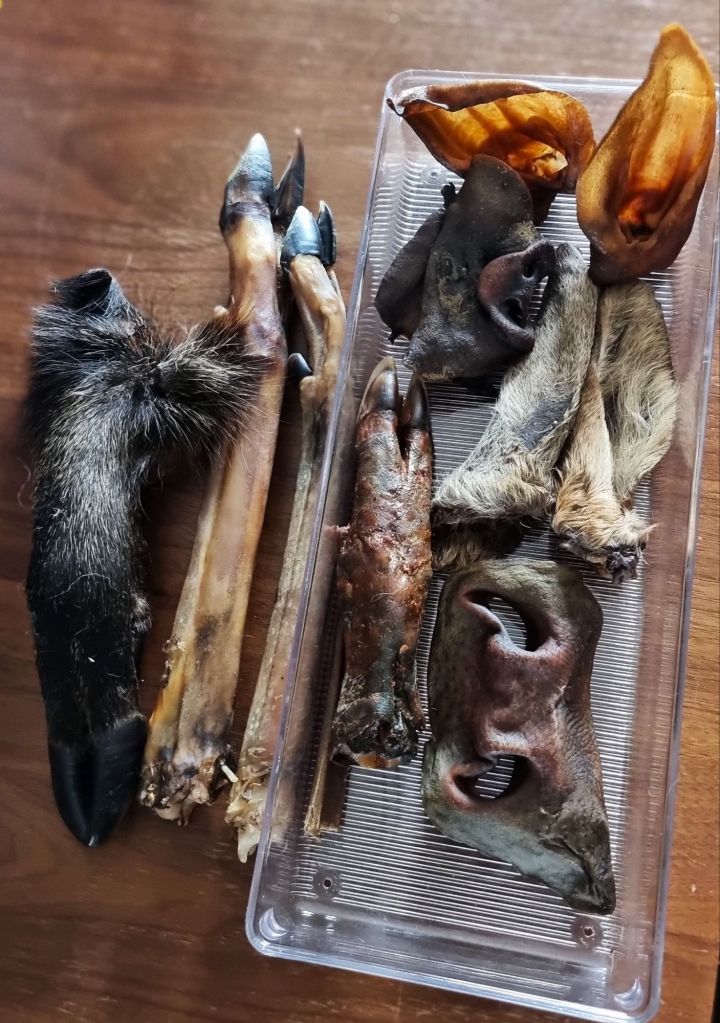
As the puppies get older, using things like licking mats and sniffing mats provide more natural ways of eating than a bowl: for example, licking strengthens the puppies’ jaw and neck muscles, which are crucial for their balance. Similarly, using sniffing mats encourages foraging behaviour and natural movement of the head and neck. Another way to boost physical development is to provide small things to chew on a regular basis as the puppies get older.
The ripple effect goes beyond individual dogs
Investing in enriched foundations for puppies extends far beyond the immediate benefits to individual dogs. By nurturing puppies through scientifically backed enrichment protocols, we cultivate temperaments that are psychologically balanced and well-suited for close human-dog bonds.
When dogs are well-adjusted, confident, and less stressed, they interact more positively with their human families and the wider community. This can lead to a reduction in behaviour-related issues that often challenge dog-owner relationships, such as anxiety-driven destruction or fear-based aggression. Well-socialized and mentally stable dogs are more likely to be involved in activities, participate in public life, and even contribute to roles such as therapy or service work.
Furthermore, the benefits of these enriched beginnings are not just for the current generation. The positive effects can cascade down generationally. Dogs that have been raised in enriched environments may pass on their stable and adaptable temperaments to their offspring, either through learned behaviors or potentially through epigenetic changes, as some research suggests.
I am aware that many of the activities I describe are resource-intensive in terms of time, effort, and cost, which might make them less feasible for every breeder. However, I think that it’s important to ask ourselves what, then, is our motivation to bring dogs into this world if we are not prepared to do our best to give them optimal capabilities to thrive.
I believe that we owe it to the dogs we raise as well as their future families so that they can have as happy and stress-free lives together as possible. We also owe it to the future of our breed to invest more heavily in the approach we take to raising puppies, because at this phase of our history, every single dog is an ambassador for all of us so failing to give puppies the appropriate life skills will ultimately impact the reputation of our breed in the form of behavioural problems and rehomed dogs.
 BusyDoggie