
This past spring, I took a long-planned career break to fully immerse myself in an intensive yet rewarding project close to my heart – raising a litter of puppies using structured, science-backed enrichment techniques tailored to their developmental stages. I wanted to write about my journey and share some of the research that informed my approach in case it helps or inspires someone else.
In real life, I work as behavioural science consultant helping global companies use psychological insights to improve their businesses. This academic background has been incredibly helpful in preparation for this special project, because I’m used to reading scientific literature and many theoretical concepts are similar across species. I have been learning extensively about dog behaviour for years through books, webinars and courses because I’m fascinated by the rapidly growing field of canine science as it reveals remarkable parallels between human and canine capacities – discoveries which can further our understanding of the human brain too.
Combining my expertise in behavioural science with hands-on experience of putting the science to practice proved both fascinating and profoundly meaningful. In this article, I delve into the intricacies of raising puppies and share some of the key insights that emerged through this undertaking blending both my passions.
Please enjoy the journey, and if you are a fellow dog nerd there is a list of further reading in each section!
Read more about the science
Dogs as a model for understanding human social cognition
Comparative social cognition: what can dogs teach us?
How Studying Dogs Helps Us Understand Human Social Learning
The World from a Dog’s Point of View: A Review and Synthesis of Dog Cognition Research
For those who are passionate about adopting dogs
I know many people feel passionate about adopting dogs and are against purposely bred dogs – a perspective I wholeheartedly understand because unethical practices are rampant everywhere in the dog world. How dogs come into our lives is a complex and highly emotive topic that I can’t do justice here but for me, a better future looks like as many dogs as possible getting a great start in life, without having to go through traumatising experiences such as a shelter or a puppy mill. Research shows early life hardship negatively impacts executive function development in both humans and dogs, while surmountable challenges positively shape these skills. A better future also includes cleaning up the mess we humans have made by engaging in many unethical practices such as inbreeding or selecting for exaggerated features that harm their health, and instead doing our best to ensure a healthy, happy life for them. And in some cases, specialised working dogs with hard-to-find characteristics are needed – for example, search-and-rescue dogs specialising in human remain detection require specific traits like strong motivation, boldness, and adaptability to stress. One of our puppies will grow up to specialize in human remain detection, and our goal was providing her the ideal developmental foundation.
The Serious Pursuit of Raising Resilient Puppies
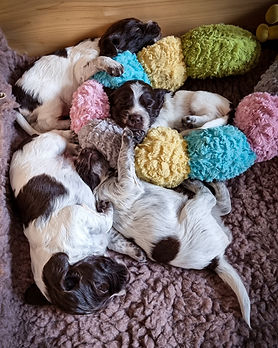
Contrary to popular belief, raising healthy, balanced puppies is far more complex than it is fun – it requires round the clock care and expertise. At a basic level, you serve as midwife, nurse, teacher and more – in a single day, you may play the role of veterinary technician taking puppy weights, dinner lady providing balanced meals, janitor cleaning up accidents, a kindergarten teacher managing an unruly play session, and counsellor soothing an overwhelmed pup. However, the job becomes exponentially more complex and nuanced if your goal is developing resilient dogs equipped to handle life’s stresses.
Building true resilience relies on a flexible, adaptable brain and coping behaviours, fostered through early positive experiences that provide safety, stimulation and care. Without these, stress damages developing brains by altering wiring and structures critical for learning and memory. This overactivates the amygdala and disrupts the stress response system long-term, preventing proper management later in life. Resilience also impacts an individual’s physical health because stress affects all systems of the body including the musculoskeletal, respiratory, cardiovascular, endocrine, gastrointestinal, nervous, and reproductive systems.
I see building resilience through positive early interventions as an ethical responsibility because by establishing crucial reserves, we can build the foundations for lifelong mental and physical health that buffer the harmful effects of stress. Research also shows that both enriching and adverse experiences cause epigenetic modifications to stress reactivity and learning capacity over generations. While supportive early care benefits individuals directly, it may also aid descendants by reducing susceptibility to stress. As such, anyone raising puppies should learn extensively about behavioural genetics, nutrition, neuroscience and more to comprehensively support development because developing resilience is a complex challenge requiring expertise across multiple scientific disciplines.
While research on resilience in puppies is limited, insights can be drawn from diverse literature on early neurological enrichment across species. For example, studies on rat pups reveal how maternal care impacts stress reactivity and human infant research demonstrates the cognitive benefits of multisensory stimulation. The key is finding the optimal balance of stressors – too few can be just as detrimental as too many!

Dog breeding practices have evolved over time, often prioritizing human interests over canine wellbeing. This means it is worthwhile to reevaluate traditional approaches in light of scientific research. One example is the common yet counterproductive practice of premature imposed weaning around 3 weeks old with many well-intentioned breeders separating puppies from their mother at this young age. However, research suggests this early separation impairs emotional regulation and frustration tolerance long-term with puppies who are removed too soon exhibiting more behavioral issues as adults compared to those allowed to wean naturally. When given autonomy, mother dogs instinctively wind down nursing gradually as puppies grow independent and provides important coping skill-building experiences for puppies. While a clear, early separation may seem more convenient for humans, its detrimental effects on puppy temperament highlight the value of following the mother’s lead and scientific research.
Bringing together insights from different fields is key to raising resilient, healthy dogs – behavioral genetics, nutrition science, and developmental neuroscience each provide part of the puzzle. By pulling from diverse areas of research, we can design comprehensive programs to set them up for success – although it isn’t easy, the rewards of raising adaptable, resilient puppies make the effort more than worthwhile.
Read more about the science
Resilience In Dogs? Lessons From Other Species
Puppy Socialization Starts with the Breeder: Early Neurological Stimulation
Impact of maternal care on resilience
Adverse impact of prenatal maternal stress in humans + impact across generations
Environmental influences on development of executive functions in dogs
The Genetic Lottery: Selecting Parents Mindfully
Selecting the right parental matches requires comprehensive understanding of canine genetics and structure to minimize risks and promote wellbeing, although nothing can be guaranteed. Dogs are not born blank slates: substantial research shows that heritability varies across traits, and each puppy inherits a unique combination of their parents’ traits. This combination can be synergistic or detrimental to life outcomes: for example, a highly anxious mother with an aloof, independent father could result in puppies being genetically predisposed to both fearfulness and detachment – a risky combination for family companionship. As such, a thorough understanding of genetics of health and behaviour are crucial when making decisions about the parents – especially for intense, high-energy working breeds.
Small caveat, though: behavioural genetics is complex, heritability of traits varies and many other factors such as nurture and life experiences interact with a dog’s genetic heritage so making responsible choices does not guarantee certain outcomes, but like everything else in dog breeding, it’s a game of stacking the odds in your favour and minimising risk.
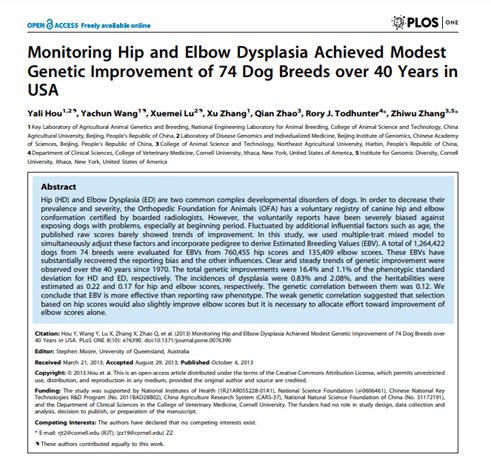
A prime example of the intricacies of canine genetics is hip dysplasia, a prevalent condition impacting millions of dogs worldwide. Despite extensive research and massive efforts, reducing its incidence has seen only modest gains, due to its multifactorial nature. Hip dysplasia is only partly genetic, with no definitive test available. While x-ray based screening provides valuable insights, even knowing parental history offers limited certainty. The heritability degree also varies significantly among breeds – it is 50% genetic for Newfoundlands versus just 16% for Brittany Spaniels, with most breeds’ true heritability unknown especially as it also varies by population. Moreover, excluding dogs from the gene pool based on one trait ignores critical interrelationships with others: for example, excitability as a behavioural trait strongly correlates with joint hypermobility. The complexities of hip dysplasia genetics exemplify the diligence required in ethical breeding decisions that holistically consider canine health and temperament.
Ethical breeding also requires careful structural evaluation of the parents, as a dog’s structure impacts movement and lifelong wellbeing – the goal is optimizing functionality and health, not judging worth. Historically, structure’s effect on behavior and health has been overlooked across veterinary medicine, training, and breeding. Dogs with suboptimal structure are prone to issues like muscle tension from compensating for imbalances. Over time, this can cause pain and stiffness that manifests as aggression or other behavioral problems. Ethical breeding requires careful structural evaluation to promote puppies’ lifelong physical and mental wellbeing, although risks cannot be fully eliminated.
Read more about how we chose the parents
The dogs’ relatedness – aka genetic diversity. Grace’s temperament; Hunter’s temperament and structure – however, there is more to say about structure – this is just a brief summary. For more references, see here.
Read more about the science
My research review on canine genetics and health testing
My research review on canine hip dysplasia
Built to Last: The Basics of Canine Conformation & Anatomy
Form follows function: canine skeletal structure
Working Dogs: Form and Function (editorial)
Working Dog Structure: Evaluation and Relationship to Function
Research review on canine hip dysplasia
Collection of information about structure and movement
Enriching Critical Early Weeks
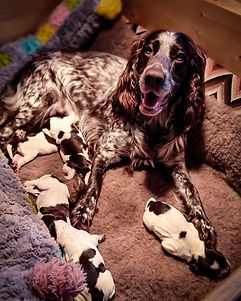
Most people’s experience of puppies starts from the moment one moves into their house, rarely considering what happened before then – yet much of a dog’s life is profoundly shaped by events preceding their time together.
The first two weeks are crucially important: starting from whelping, which can be very risky for mothers and puppies as even smooth deliveries can tragically end during the fragile first weeks with a puppy “fading away” while high quality of maternal care provides puppies lifelong well-being advantages.
These early weeks also represent a critical period for puppy brain development: Early Neurological Stimulation techniques (ENS, also sometimes called bio-sensor), such as those developed by the U.S. Military, can powerfully leverage neuroplasticity during this time. Controlled exposure to mild stressors from novel textures to movement exercises helps wire puppy brains for future resilience. These simple daily exercises in the first two weeks aim to stimulate low-intensity stress responses that build coping skills, optimizing nervous system regulation and establishing crucial neural pathways.
The neonatal period is also a time for Early Scent Introduction (ESI), a puppy training program designed to enhance odor identification and reaction abilities which involves controlled exposure to strong scents in brief daily intervals and recording puppies’ responses. Originally developed by Avidog, early scent introduction leverages neuroplasticity to boost scent detection and identification skills and may accelerate proficiency in scent-based sports like tracking and nosework. By stimulating olfactory development during critical windows, it equips puppies for success in odor-centric activities and tasks.
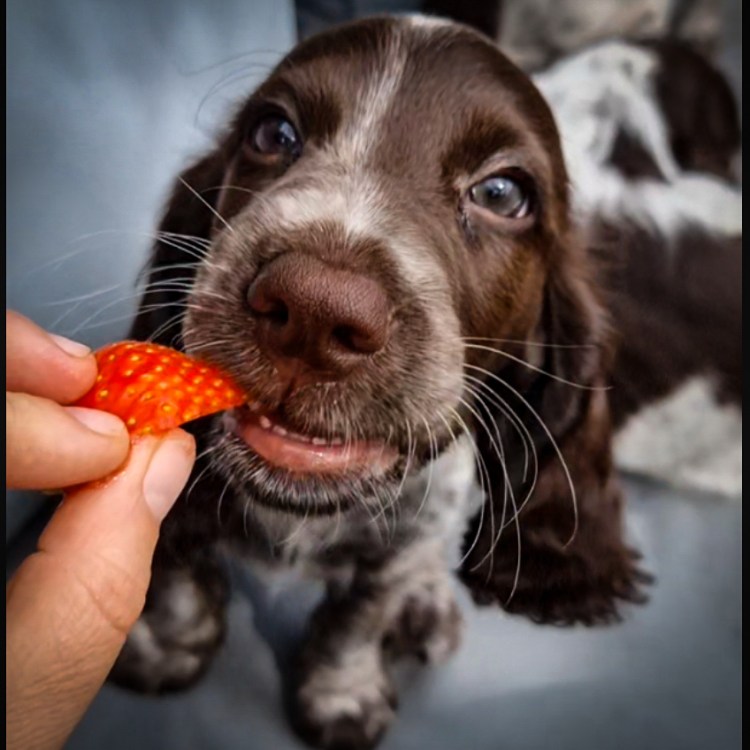
Another important building block is pre-and postnatal nutrition: for example, amplifying DHA (an Omega-3 fatty acid) intake during pregnancy and early puppyhood positively impacts brain development and function for life. DHA fuels brain and eye growth during critical developmental windows as well as enhancing cognition by improving attention, memory and trainability. For example, studies show DHA-fortified diets helped puppies outperform on assessments of learning, discrimination and coordination compared to puppies without enough DHA. Overall, recent research suggests that puppyhood diet may also influence the incidence of canine chronic gastrointestinal problems later in life.
After overcoming those initial hurdles, the job changes to implementing a structured socialization and enrichment program using scientifically validated techniques such as controlled exposures to sounds and introducing the puppies to a wide range of novel experiences at critical developmental stages to reduce future stress. This novelty encourages exploration and learning by releasing key neurotransmitters like dopamine and takes advantage of this learning window of heightened neuroplasticity in young puppies.
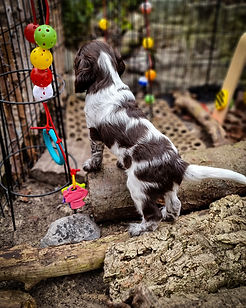
Enrichment programs refer to protocols designed to provide physical and mental stimulation through novelty, tasks, and multisensory experiences. These types of protocols are commonly used when raising assistance or service dogs as well as professional search and rescue dogs like one of our puppies who will eventually work as a human-remains detection dog in Switzerland. For example, sound desensitization during the optimal developmental window habituates puppies to noises like fireworks, reducing future stressors.
In many ways, modern enriched environment puppy protocols have many parallels with key Montessori techniques like prepared environments and child-directed activity that ignites love of learning in the “absorbent mind” and their principles of fostering independence and free choice. These types of protocols are commonly used when raising assistance or service dogs as well as professional search and rescue dogs like one of our puppies who will eventually work as a human-remains detection dog in Switzerland.
In the sweet period after the sigh of relief that you’ve successfully kept them all alive until they’re out of mortal danger, it was fascinating as a behavioural scientist to witness their perceptual worlds evolve from tentative explorations to complex interactions and observe their cognitive capabilities developing in real time – often in response to environmental interventions I had designed.
Read more about the science
Effects of gestational stress on juvenile offspring behavior
Impact of maternal care on resilience + Influence of Maternal Care on Behavioural Development of Domestic Dogs (Canis Familiaris) Living in a Home Environment
Behavioral and psychological outcomes for dogs sold as puppies through pet stores and/or born in commercial breeding establishments (re: early weaning)
Boosting Puppy Brains for Trainability With Omega-3 Fatty Acids
How can DHA dietary supplementation support brain development in pets?
The importance of good nutrition in growing puppies and kittens
Puppy Socialization Starts with the Breeder: Early Neurological Stimulation + scientific article
Avidog ESI information & Avidog’s Early Scent Introduction Litter Chart
Perinatal Olfactory Learning in the Domestic Dog
Minimizing fear and anxiety in working dogs: a review
Programming social, cognitive, and neuroendocrine development by early exposure to novelty
VIDEOS: Early Socialization for Puppies – Novel Sounds, Introduction to new environments, Promoting healthy motor development, Interactive activity (trolley ride)
Early Socialization for Puppies – Introduction to New Environments (VIDEO)
Joint hypermobility and excitability in a non-human species, the domestic dog
Behavioral and cognitive factors that affect the success of scent detection dogs
Surviving the Puppy Pandemonium
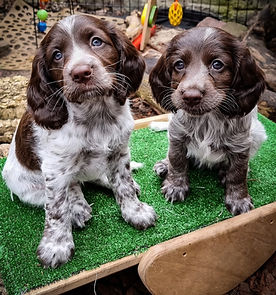
That rose-tinted honeymoon period ends around week 6 when their physical abilities and endless curiosity explode exponentially, unhindered by any sense of fear – especially if you have deliberately tried to nurture their confidence! Like raptors breaking out of Jurassic Park, our puppies scaled fences and dug tunnels to an imaginary soundtrack that includes the Benny Hill theme song, “Dumb Ways to Die” and Mission Impossible.
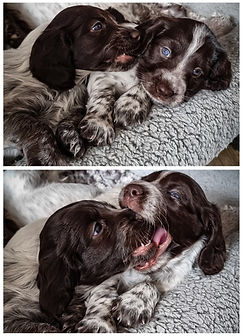
Constant vigilance is crucial if you want to stay one step ahead of these tiny, furry lemmings because they are a force of nature – just as you pat yourself on the back of having outwitted them, their rapidly evolving capabilities will catch you out again and again. Impervious to reason, the only way to manage the tiny tornadoes is misdirection and bribery – redirect them to more appropriate activities until they finally run out of battery power, briefly and usually one at a time so that you can never relax for long. I quickly learned there’s no such thing as sweet and innocent puppies except when they’re asleep – the rest of the time they violently torture their siblings by biting their ears repeatedly, pulling them by the tail or just going straight for the jugular for the umpteenth time.

In addition to digging holes in our garden like they’re in a re-enactment of The Great Escape and executing elaborate toy heists, one particularly enjoyable pastime is ripping open delivery boxes – the fastest the 6 piranhas got into a large, fully sealed delivery box of dog food was 15 minutes. Managing the environment to allow safe yet enriching exploration mirrors Maria Montessori’s emphasis on enabling children to learn through hands-on activity and, despite the chaos, their endless curiosity was a joy to witness. The experiences in this sensitive developmental period also influence the development of executive functions – i.e. abilities like inhibitory control, cognitive flexibility, and working memory capacity. Just like in humans, the development of a dogs’ EFs may be negatively affected by hardships, and positively by overcoming surmountable challenges.
Although puppies typically leave for their forever homes at the age of 8 weeks, most of ours stayed longer because they were moving to other European countries, so we also had the responsibility of ensuring adequate socialisation in the critical development window before it closes around 15 weeks. So, in order to habituate the puppies to a wide range of real-world environments, you would find us visiting street markets. sports competitions and beaches with a trolley of puppies – and of course several visits to the airport to help one of our puppies prepare for her flight to Switzerland.

N.B. Many breeders are lucky enough to have acres of space, large outdoor enclosures for puppies and separate indoor facilities for them which inevitably makes life with puppies much easier for them. This is difficult to achieve in densely populated areas around major cities like Amsterdam, so our experience is based on raising puppies in our home environment and sharing our lives with them 24/7.
Read more about the science
Socialization effects on adult dog behavior
International Working Dog Association: Early Socialization Project
Environmental influences on development of executive functions in dogs
Extra Early Socialization for Puppies Makes a Big Difference
Lessons Learned
As a behavioral scientist, I was particularly fascinated to recognize many familiar cognitive biases emerge in puppy behavior. Much like humans, puppies exhibit mental shortcuts that shape their actions and decisions in predictable ways and it was endlessly interesting to see these tendencies manifest organically, lending insight into core aspects of the canine mind.
For example, puppies show a strong preference for immediate gratification, reflecting limited future thinking (hyperbolic discounting) while action bias sends energetic puppies digging just to do something, without purpose. They are also prone to groupthink, rapidly joining in on behaviours like frantic digging once initiated by one bold pup – especially as puppies’ attention is easily drawn to any salient stimuli. Persistently trying to repeat behaviours like jumping on furniture or climbing fences despite past failures demonstrated the overconfidence and optimism biases, reflecting a belief in good outcomes against the odds and past experiences.
While often adaptive, these inborn biases can also lead puppies astray, not unlike human cognitive pitfalls. As a behavioural scientist, it was fascinating to observe these biases manifesting in real time and knowing these concepts often helped me stay one step ahead of the puppies’ antics while making their puppyhood endlessly fascinating to observe.
All in all, this project has been the most meaningful and fulfilling endeavor of my life. It was a privilege to closely observe the development of dogs from birth to 15 weeks, witnessing how they perceive the world and interact with one another. The dogs we raised will share their lives with their families for a decade or more, and every aspect of their upbringing impacts those relationships.
Through this project, I have grown both personally and professionally, gaining surprising insights into the complexities of decision-making, risk management, and the well-being of our furry companions. This experience also provided perspective on the challenges those with limited time, energy and resources face when trying to make complex decisions and engage in new behaviours. The intensive demands on mental bandwidth I experienced under sleep deprivation mirrored some of the struggles faced when juggling jobs, family obligations and health issues.
Would I do it again? Absolutely – just let me sleep for a year first.
And if you want to see fun videos of puppies running, you can find them here, here and here – enjoy!
If you want to read more:
 BusyDoggie