The job of the Polish Hunting Spaniel (PSM) is to excel as a versatile hunting companion – a task where its physical structure also plays a crucial role. In this article, we’ll explore why structure matters for a PSM’s health and performance and how breed standards serve as a blueprint for ensuring that our dogs are well-suited for their intended purposes.
This post is a short version of a long article with references and resources (The Anatomy of a Breed Standard) originally written for our breed club magazine. There is also a breed-agnostic version (How to analyse your dog’s structure).
Introduction
When it comes to dog breeding and ownership, there is a common misconception that a dog’s working ability is more important than its physical structure. However, this belief can lead to serious health and performance issues for dogs. A well-structured dog is not only more capable of performing its duties, but it is also more likely to lead a healthier, happier life.
Just as a high-performance car needs a durable chassis to handle the demands of the road, a dog’s physical structure is crucial for its ability to perform its intended tasks efficiently and without injury. Like different types of cars that are designed for specific purposes, dogs have been bred for diverse roles, from hunting and herding to companion and service work.
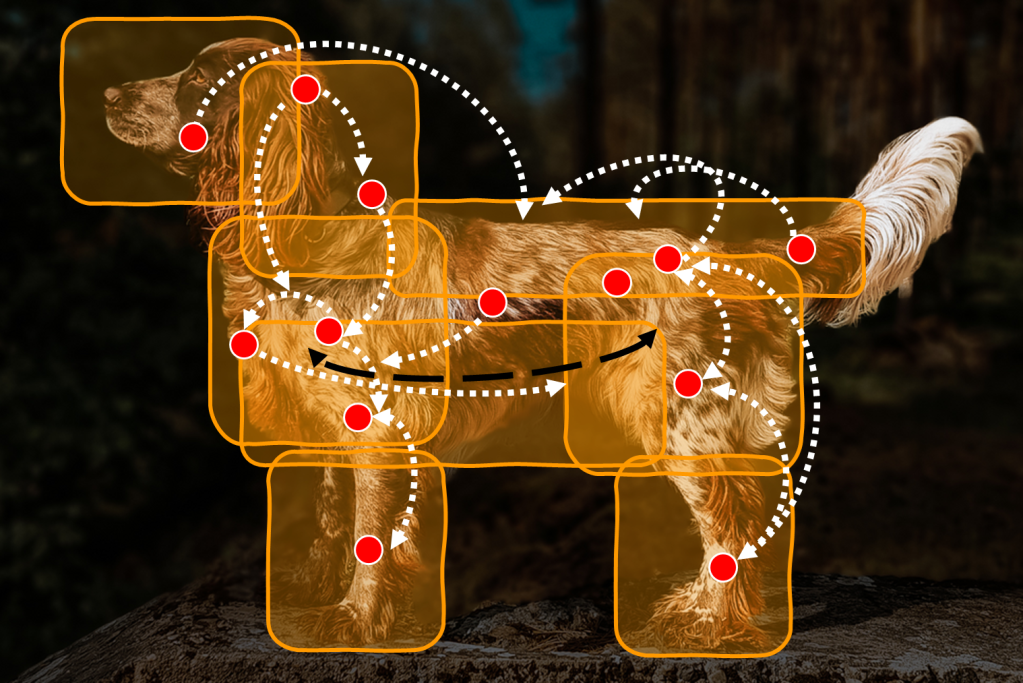
In this article, we will explore why structure matters for dog health and performance, and how breed standards play a critical role in ensuring that dogs are well-suited for their intended purposes. We will also discuss key aspects of a dog’s structure, such as the importance of balanced front and rear angles, proper forequarters and hindquarters, and breed-specific features like skull shape and tail set. By prioritizing sound structure alongside working ability, breeders and owners can ensure that their dogs are not only capable performers but also happy, healthy companions for the duration of their lives.
Structural integrity enables health and performance
Form follows function, which means that a dog’s physical structure should be suited to its intended purpose. A sound structure enables a dog to perform its tasks safely and effectively. Ignoring sound structure for performance can cause health issues over time.
Dogs with strong working instincts can tolerate the discomfort that arises from conformational flaws while they are young. However, motivated dogs often push past their physical limits and risk getting injured. This is why breed standards matter: they help prevent harm by aligning anatomy with the purpose of the dog and are essential for maintaining the health, functionality, and longevity of a breed.
They outline the optimal physical attributes necessary for a dog to perform its traditional roles efficiently. However, it’s important to note that breed standards should not be viewed as mere vanity or a relic of the show dog world. Rather, they are a critical tool for ensuring that dogs are well-suited for their intended purposes.
Breed standards: blueprint for athletic form
Just as a high-performance car needs a chassis that can withstand the demands of the road, a dog’s physical structure must be suited to its intended purpose in order to perform at its best. Breed standards serve as a blueprint for a dog’s athletic form, providing optimized specifications for the demands of the work they were bred to do.
Like a car’s design specifications, breed standards account for factors such as terrain, speed, and the physical demands the dog must handle. For example, a border collie herding sheep on rough terrain requires a different set of physical attributes than a greyhound racing on a flat track.
For example, the Polish Hunting Spaniel (PSM) breed standard emphasizes the importance of a balanced and harmonious structure that enables the dog to move efficiently and effectively in diverse terrains. Key aspects of the breed standard, such as the ratio of height at withers to the length of the body and the description of the limbs and coat, directly relate to the dog’s ability to perform its hunting tasks without undue physical strain. These standards ensure that the PSM can navigate diverse terrains, maintain stamina, and reduce the risk of injury.
Unfortunately, in many established breeds, the reality of what gets rewarded at exhibitions is often different from the original standards and exaggerated compared to what was required for the breed’s original role. This can lead to health and performance issues for dogs.
In contrast, the PSM breed standard is a great example of how breed standards are applied to preserve the health and functionality of a specific breed. The PSM standard emphasizes the importance of a balanced and harmonious structure that enables the dog to move efficiently and effectively in diverse terrains. The standard also outlines optimal proportions and muscular development to handle the physical demands of hunting while also ensuring that the dog is healthy and able to maintain stamina.
Comprehensive structural evaluations matter
When discussing health in dog breeding, the focus is typically on hip and elbow evaluations. However, a dog’s structural soundness goes beyond just these two joints. Balanced angles reduce wear on joints, minimizing the risk of injury and painful conditions like arthritis or hip dysplasia over time.
Comprehensive structural evaluations are essential to ensure that a dog is well-suited for its intended purpose, just as assessing only the engine of a car is not enough to determine its overall performance. A dog’s front and rear assembly, overall balance and proportion, and breed-specific features must all be evaluated to ensure that the dog can perform its job efficiently and without injury. A dog with structural weaknesses cannot recover as effectively from demanding activities as well-conformed dogs which can lead to health issues.
Key aspects of a dog’s front assembly
A dog’s front assembly plays a critical role in its ability to perform its traditional roles efficiently. The front assembly includes the shoulders, upper arms, elbows, and front legs. The front suspension of a car is comparable to a dog’s forequarters, which must absorb impact and protect the shoulders and spine. Proper angulation and alignment of the shoulders, elbows, and front legs are crucial for efficient movement and reducing the risk of injury.
Here are some key aspects of a dog’s front assembly to consider:
- Shoulder and upper arm: The angle of the shoulder blade (scapula) relative to the horizontal plane is known as shoulder layback, which is crucial for efficient movement and reducing injury risk because an upright shoulder restricts movement and strains the shoulder joint. The upper arm (humerus) should be long enough to provide good reach and extension, because a short upper arm limits a dog’s ability to move efficiently.
- Elbow angulation: The elbow joint should be well-angled to provide shock absorption and reduce the risk of injury. Straight elbows can lead to increased concussion and joint strain.
- Front leg alignment: The front legs should be straight and parallel when viewed from the front, and should stand firmly on the ground. Legs that curve in or out can lead to increased joint strain and decreased efficiency.
- Pasterns: The pasterns should be strong and flexible, with a slight angle to absorb shock and provide good traction. Weak or straight pasterns can lead to increased joint strain and decreased stability.
Key aspects of a dog’s rear assembly
A dog’s rear assembly is responsible for providing the power and drive necessary for efficient movement. The rear assembly includes the pelvis, thighs, stifles (knees), hocks, and rear feet. The hindquarters, like a car’s powerhouse engine, provide the propulsion and turning ability necessary for a dog to perform its tasks effectively.
Here are some key aspects of a dog’s rear assembly to consider:
- Pelvis and thigh: The pelvis and thigh should be well-muscled and properly angulated to provide efficient movement and reduce the risk of injury.
- Stifle angulation: The stifle joint should be well-angled to provide shock absorption and reduce the risk of injury.
- Hock angulation: The hock joint should be well-angled to provide proper extension and reduce the risk of injury.
- Rear foot alignment: The rear feet should be straight and parallel when viewed from the rear and should stand firmly on the ground. Feet that turn in or out can lead to decreased efficiency and increased strain on the joints.
The importance of overall balance and proportion
While the front and rear assemblies are critical components of a dog’s structure, it’s important to evaluate the dog’s overall balance and proportion as well. Here are some key aspects of overall balance and proportion to consider:
- Length of back: The length of a dog’s back should be in proportion to its height at the withers. A back that is too long can lead to decreased efficiency and increased strain on the joints.
- Chest depth and width: The chest should be deep and wide enough to provide adequate room for the heart and lungs. A chest that is too shallow or narrow can lead to decreased efficiency and increased strain on the respiratory system.
- Body length to leg length ratio: The length of a dog’s body should be in proportion to the length of its legs. A dog that is too long or too short in the body can have difficulty moving efficiently and may be more prone to back injury.
- Head and neck carriage: Head and neck carriage are important for maintaining proper balance and alignment of the dog’s spine. A dog with proper head and neck carriage will have a more fluid and efficient gait, reducing the risk of injury and fatigue.
Developing supportive muscle groups through proper conditioning is also important for efficient movement and injury prevention.
A dog’s front legs should stand straight and grip the ground firmly to push weight forward in a straight line, while the rear should be positioned for optimal function through proper angulation. Any deviation from proper alignment can lead to decreased efficiency, increased strain on joints, and potential health issues later in life.
Conclusion
In conclusion, a dog’s structure plays a critical role in its ability to perform its intended tasks efficiently and without injury. Just as a car’s design and components must work together to achieve optimal performance, a dog’s physical structure must be suited to its intended purpose.
While form is important, function should always be the primary consideration. By using breed standards as a blueprint for athletic form and conducting comprehensive structural evaluations, breeders and owners can ensure that their dogs are well-suited for their intended purposes and able to lead healthy, happy lives.
 BusyDoggie