Many assume that if a dog can perform its job well, it must be fit and healthy but working ability alone is not enough. The key to a long, injury-free life lies in a dog’s structural conformation. Proper structure supports the body, prevents injury, and ensures that the dog can perform at its best over time, without premature wear or fatigue.
Poor conformation exacerbates risks for health problems such as hip and elbow dysplasia as well as Intervertebral Disc Disease (IVDD) – especially when combined with intense activity. Breeding for proper joint conformation is key to preventing hip and elbow dysplasia. Well-structured joints, as promoted by breed standards, ensure proper alignment and weight distribution during movement, reducing stress on these joints during high-impact activities like running and jumping.
Breed standards, when developed correctly, promote sound structure that allows a dog to perform at its best while minimizing the risk of injury, wear and tear, and exhaustion. I’ve written about this before, but a lot of it is very technical, so this time I will focus on specific structural traits that can lead to problems such as joint injuries, early fatigue, and long-term wear and tear in spaniels and similar hunting dogs.
This is a selection of issues that you might see in spaniels – for more details and further reading, see links at the bottom of the article.
1. Shoulder angulation and forelimb structure
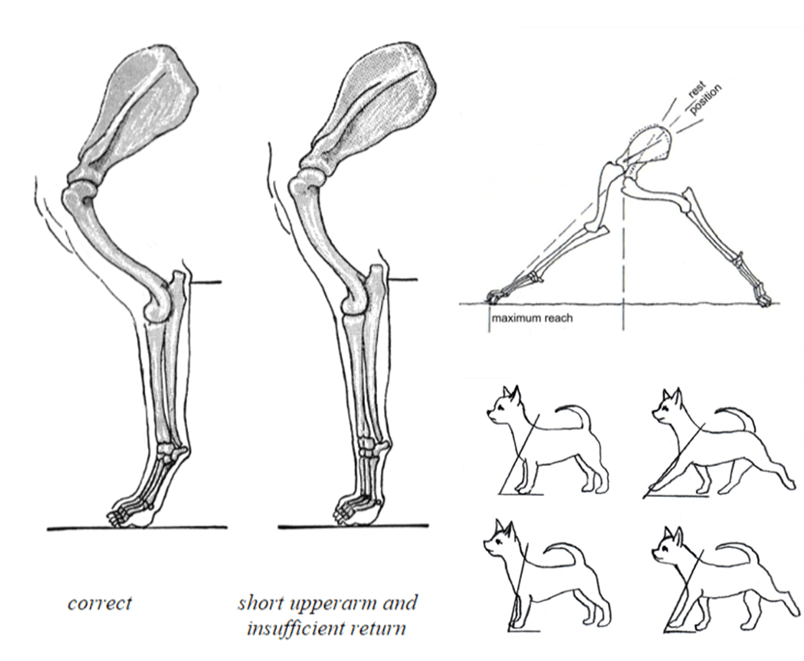
A well-angulated shoulder (around 90 degrees between scapula and humerus) helps the dog move efficiently while absorbing impact, protecting its joints from excessive wear and preventing conditions like arthritis or elbow dysplasia.
Insufficient shoulder angulation causes inefficient shock absorption, putting excessive strain on the shoulders, elbows, and wrists. This can lead to shorter strides, forcing more steps and greater impact on joints over time. Spaniels with upright shoulders are more prone to shoulder and elbow injuries, especially when running over rough terrain or flushing game.
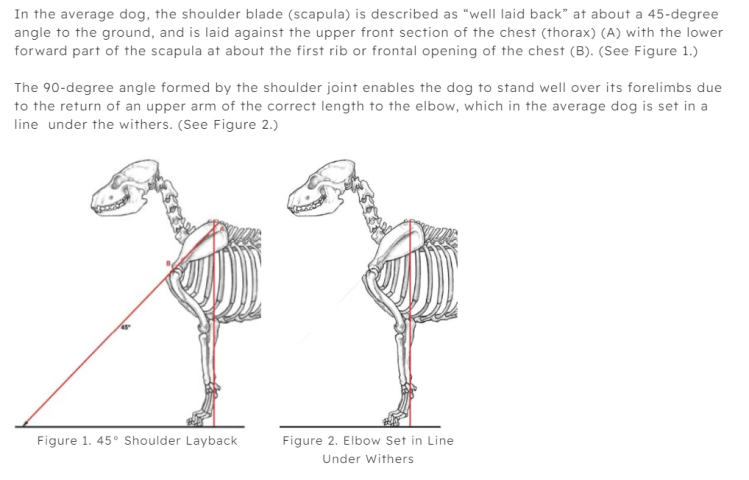
Additionally, shoulder placement plays a role. Since most of the dog’s weight is supported by the front limbs, a poorly placed shoulder assembly disrupts its center of gravity, weakening the joints as they try to compensate. This also causes insufficient muscle development, leading to an inverted V-shaped body—a structural fault.
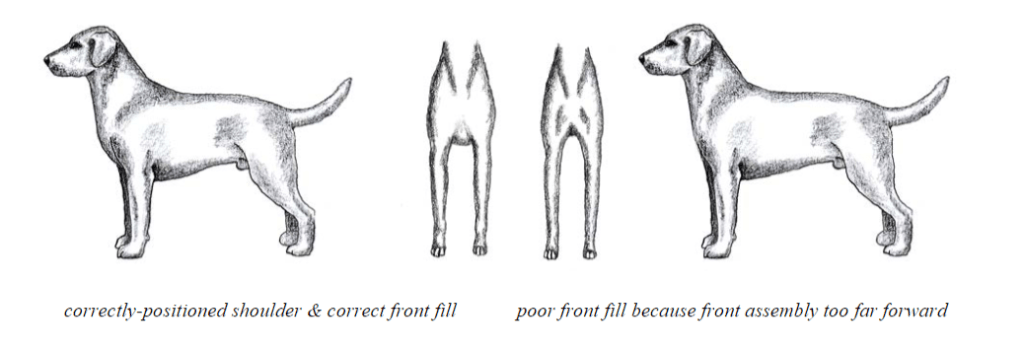
Indicators of poor front assembly include: short, choppy steps, bouncing at the withers, straight front pasterns, short neck, and lack of forechest.
2. Hindquarter angulation and power
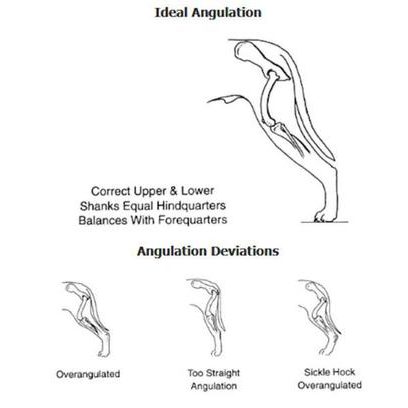
The stifle angle varies by breed and purpose: Arctic breeds need straighter stifles for strength in pulling, while dogs like Dachshunds and Greyhounds require well-bent stifles for agility, crawling, or speed.
Spaniels need moderate stifle and hock angulation because enables powerful propulsion and efficient shock absorption. They need to combine both agility and endurance to be able to jump, turn quickly, and move efficiently through dense cover without sacrificing stability or risking injury.

Correct angulation in the hind limbs allows the dog to push off effectively, maintaining balance and reducing stress on the forelimbs. This protects the dog from joint injuries in the hindquarters, such as cranial cruciate ligament (CCL) tears. In contrast, insufficient angulation in the stifle (knee) and hocks (ankle) limits the dog’s ability to generate power, forcing the dog to rely on its front limbs for propulsion. This imbalance places extra strain on the shoulders and elbows, leading to long-term wear and joint injuries like ACL tears.
3. Weak pasterns (carpal joint, front legs)
.jpg?ezimgfmt=rs:363x245/rscb2/ngcb2/notWebP)
Weak or excessively upright pasterns fail to absorb the shock of running or jumping properly, leading to overloading of the carpal joints. This can result in carpal hyperextension, sprains, and long-term joint deterioration. Spaniels frequently work on uneven terrain, making strong pasterns essential for shock absorption.
Moderately angled pasterns provide this crucial shock absorption, reducing the impact on the dog’s elbows and shoulders when running and landing from jumps.
4. Pelvic structure and hindquarter strength
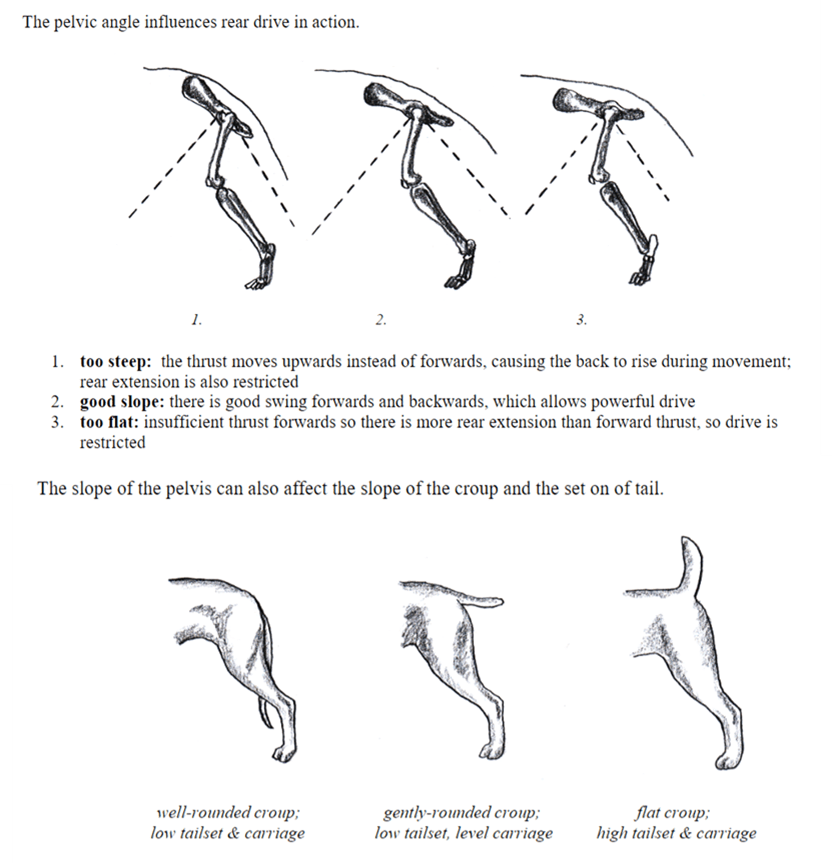
A slightly sloped, well-formed pelvis supports strong hindquarters, allowing the dog to generate power efficiently during running, jumping, and quick turns. This proper pelvic structure ensures even force distribution across all limbs, reducing stress on both the front and rear limbs and preventing injuries.
A narrow or excessively sloped pelvis leads to inefficient power generation from the hindquarters, forcing the dog to compensate with its front limbs. This imbalance increases the risk of shoulder and elbow injuries. A weak pelvis can also contribute to hindlimb instability, making the dog more prone to injury during sudden movements.
5. Back and spine
An overly long back increases the risk of spinal injuries and disc problems (like intervertebral disc disease (IVDD)), which are common in spaniels. This condition can lead to early fatigue, reduced mobility, and debilitating issues as the dog ages.
A strong, flexible back with moderate length is ideal, supporting the twisting and turning movements needed for fieldwork without overstressing the spine. Proper back length also ensures even weight distribution, which helps prevent spinal strain.
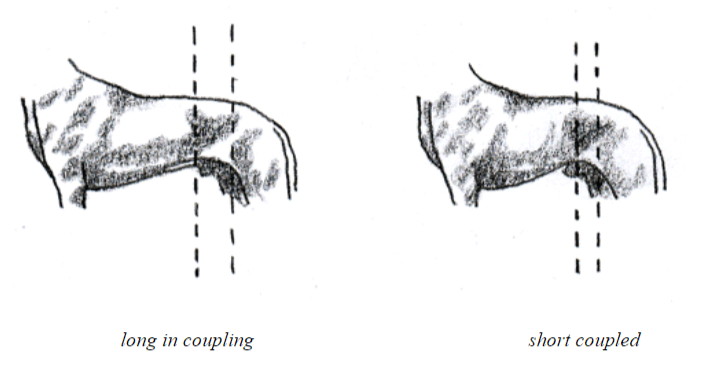
In addition, coupling—the connection between a dog’s ribcage and pelvis—is key. A long loin creates instability, putting excessive strain on the spine and back muscles, increasing the risk of injury. Well-coupled dogs with a short, strong loin have better flexibility and stability, preventing back injuries and maintaining endurance over time.
6. Fatigue and energy efficiency
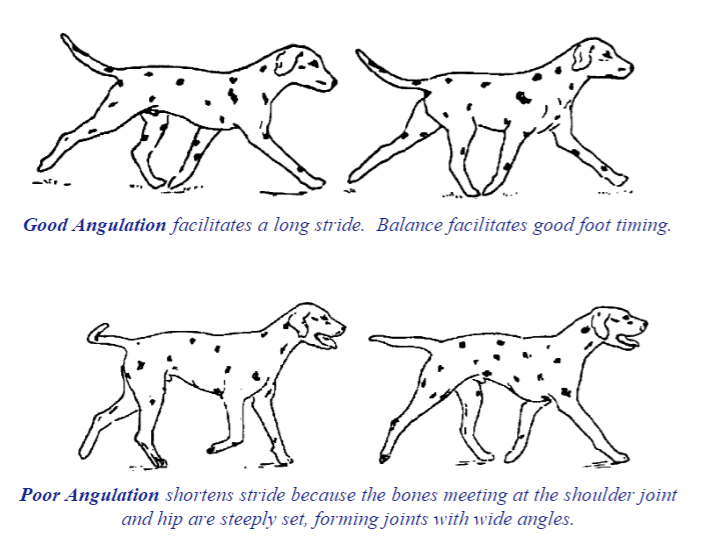
Poorly proportioned dogs—those with legs that are too short or too long relative to their body—use more energy to perform the same tasks as well-proportioned dogs. This leads to quick fatigue, reduced endurance, and chronic joint stress over time, often resulting in early arthritis.
Balanced weight-to-height and length-to-height ratios promote efficient movement, allowing the dog to work longer without tiring. This reduces repetitive stress on the joints and prevents overuse injuries.
7. Chest and rib cage
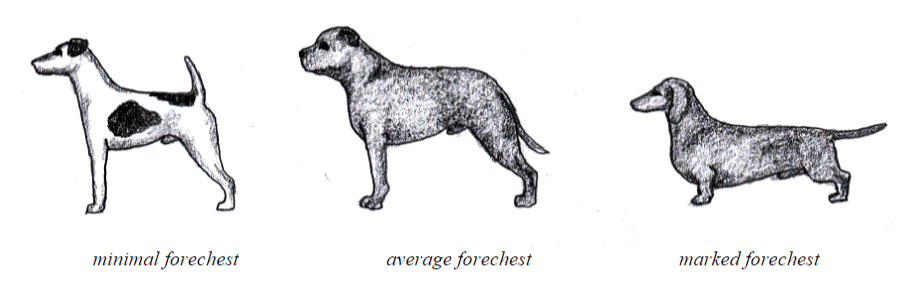
A chest that is too narrow or too deep can restrict lung capacity, limiting stamina. A narrow chest hinders lung expansion, reducing endurance, while a chest that’s too deep may hinder agility and increase the risk of bloat.
A moderately shaped chest allows for efficient lung function, providing the stamina necessary for long hunting trips. The rib cage should be well-sprung but not too wide or narrow, ensuring maximum endurance without sacrificing agility.
8. Tail set and use
The tail set is linked to the angle of the pelvis but is often evaluated separately. Improper tail carriage can affect balance, especially during sharp turns or while navigating water or dense brush. A high-set tail may cause drag in water, tiring the dog more quickly.
A moderate tail set with correct length promotes better balance and efficient movement. The tail acts as a counterbalance, aiding in quick turns and sudden changes of direction without straining the dog’s body.
9. Neck structure and function
A moderate-length, well-muscled neck is crucial for maintaining balance, flexibility, and endurance in working dogs like spaniels. A strong neck helps support the head without straining the back or shoulders, especially when carrying things.
A short neck can restrict range of motion and put extra pressure on the shoulders and spine, leading to fatigue and joint stress. On the other hand, a long, weak neck can cause uneven weight distribution, forcing the dog to overcompensate with its back and forelimbs, increasing the risk of injury. Proper neck structure allows the dog to work comfortably, reducing muscle strain and ensuring smooth movement over varied terrain.
10. Coat condition and terrain adaptability
A poorly suited coat—too thin or too dense—can lead to overheating or increased risk of cuts and abrasions in rough terrain. A well-balanced coat that is both water-resistant and insulating is ideal for spaniels, protecting them from the elements while allowing freedom of movement. This prevents drag in water, reducing strain on muscles and joints during fieldwork.
Why structure is key to long-term health
While working ability is an important measure of a dog’s performance, conformation plays an even greater role in ensuring long-term health, endurance, and injury prevention. Poor structural traits—such as improper shoulder angulation or weak hindquarters—may not cause immediate issues but can lead to long-term damage, reducing the dog’s working lifespan and quality of life.
- Joint health: Improper conformation in the shoulders, hips, or knees can lead to long-term joint issues like dysplasia, manifesting as pain and reduced mobility.
- Energy efficiency: Structural weaknesses, such as a poorly balanced back or hindquarters, force a dog to expend more energy, leading to early fatigue, even in strong working dogs.
- Injury risk: Dogs with poor angulation or weak spinal structures are more prone to injuries like ACL tears and IVDD, particularly during repetitive, high-impact activities like running and jumping.
Working ability alone is not a reliable indicator of long-term health. Even if a dog performs well for a few years, poor conformation will eventually lead to joint issues, injuries, and burnout. Breed standards offer a blueprint for physical traits that ensure dogs can work effectively and safely for longer periods.
A well-structured dog that meets a thoughtfully designed breed standard can work longer, tire less quickly, and remain injury-free, demonstrating that breed standards are essential to sustaining a dog’s performance and protecting its health.
Further reading
Form follows function: the importance of structure in dog health and performance
The anatomy of a breed standard (most detailed – also includes PSM breed standard as a comparison)
For this article, I have borrowed heavily from the images in the breeder resources created by the Drentsche Patrijshond Club of America – I highly recommend reading them!
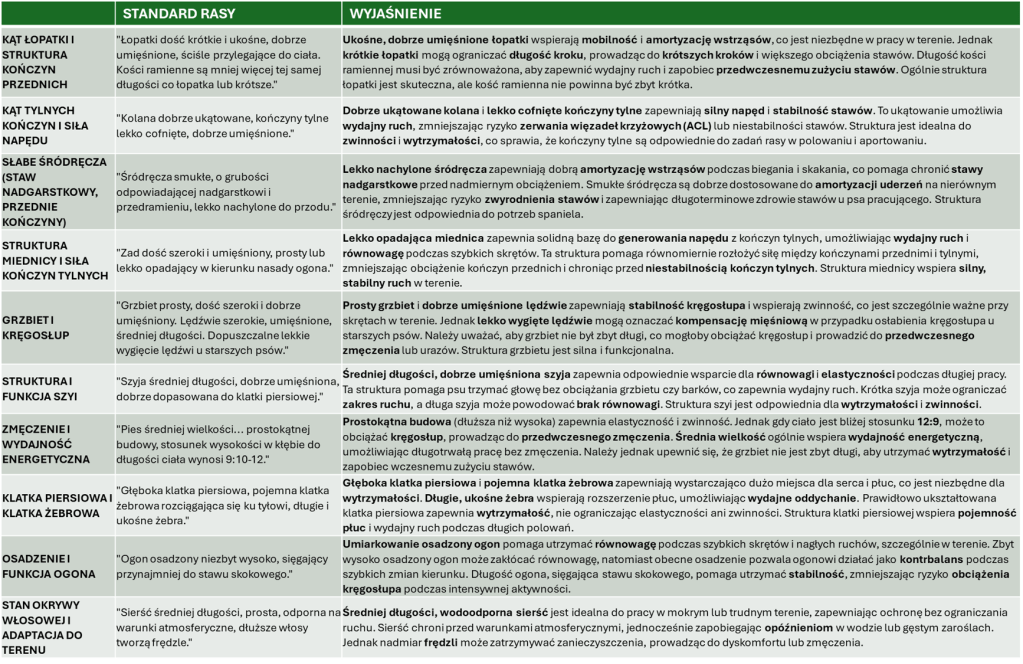
APPENDIX: Extracts from Polish Hunting Spaniel breed standard to illustrate these ideas

 BusyDoggie